Focus on: health and wellbeing in action
Museums and galleries can play a vital role in supporting health and wellbeing. They provide spaces where people can boost their confidence, build communities, and connect with culture.
For this edition of Focus on, we invited three museum workers to share how they’ve used collections, partnerships, and events to improve the health and wellbeing of their audiences.
What is the health and wellbeing priority area?
Museums and galleries improve quality of life through programmes which have a positive impact on the physical and mental health and wellbeing of people in Scotland.
This is one of the ten priorities of Scotland’s strategy for museums and galleries. You can read the health and wellbeing priority area and actions in full here.
Case study: growing a project from pilot scheme to national programme
⚽ The Scottish Football Museum started Football Memories in 2009 with a simple idea: to tackle social isolation by setting up reminiscence groups. Richard reflects on how the project has grown from an MGS-funded pilot to a national programme which benefits thousands of people right across Scotland.


“Football Memories aims to support people who are experiencing social isolation. Social isolation comes in many forms – one being dementia, which is core to the project.
Our role at the museum is to create resources that enable groups to operate under the partnership that we’ve set up. We deliver training to volunteers, who then run Football Memories sessions in their communities.
Groups meet on a drop-in basis. They use a variety of tools which we’ve provided, including packs of Football Memories cards, audio, visuals, museum tours, and a dedicated website.
The project has developed considerably since 2009, when we got funding from MGS to run the pilot. It’s now a national network of around 5,000 people in nearly 600 groups across Scotland. The large majority of these are in care homes or daycare centres. We also have a number of NHS hospitals that run groups, as well as 90 or so community-based groups.”
Supporting mental health through community engagement
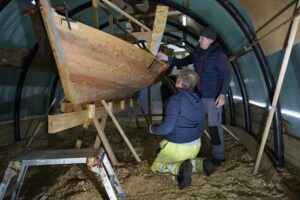
⛵ Museums can use their unique strengths – including their collections and local connections – to inspire new health and wellbeing activities. Fiona shares how Strathnaver Museum created a unique boatbuilding opportunity that supported improvements to mental health in their community.


“The health and wellbeing benefits of arts and crafts activities have been recognised through our programming at Strathnaver Museum for many years, particularly where it can reduce isolation and increase confidence.
The community is at the heart of all that we do so when one of our volunteers suggested an idea for a new project we were all ears! They were a member of Branching Out, a mental health support group who meet on a weekly basis. They wanted to build a replica of the traditional fishing boat ‘Iris’ in the Strathnaver collection as they had lived experienced of the health and wellbeing benefits of craft activities.
The suggestion was timely as we were looking to develop new partnerships and reach new audiences as part of our wider refurbishment project. Although it was an ambitious project, we felt it would deliver a range of benefits for individuals, our community, and organisation.
Over the course of the project we engaged with more diverse audiences including our key target audience of men, who are often under-represented in creative activities and at more risk of self-harm.
The sense of pride from participants and the wider community has been extraordinary: it has supported placemaking activities around fishing heritage, including potential development of the Bettyhill Fishing Bothy and the creation of a memorial to those involved in the salmon fisheries. As one participant explains: “I felt privileged to have been involved in this project and the legacy of it. It has helped to create an attachment to the place that I have moved to and acted as a gateway to become involved in other projects such as the Borgie Forest Friends group.”
The next phase will see the creation of a mast and sail, sail training, and offering repair and maintenance to traditional fishing boats along the North coast.”
📢 Visit the Strathnaver Museum website to find out more about their work.


“When we launched Brew and Blether back in May 2022, we had a simple idea: create a welcoming space where people in our local community could come together once a month to have a cuppa and chat about history. Now it’s grown into an inclusive gathering that’s helped tackle social isolation, boost wellbeing, and bring joy to HMS Unicorn.
It took some time to strike the right balance between learning and light-hearted chat – but thanks to our amazing volunteers, we’ve developed a successful format. Our volunteers play a key role in shaping each session by suggesting themes and bringing along clippings or objects to share. Their presence gives participants someone to connect with in a more informal, friendly way than a solely staff-led session could.
Brew and Blether has a lovely mix of regulars and new faces at every gathering. Friendships have blossomed, stories are shared, and even a handcrafted brass cannon has made an appearance! Although we initially aimed the event at older adults at risk of social isolation, it’s open to everyone, and we’ve seen some wonderfully unexpected outcomes – like visitors using the sessions to improve their conversational English skills.
The programme is firmly rooted in our wider strategy to develop inclusive wellbeing initiatives, using our space to actively improve mental wellbeing and engage with people in the local community.
Since 2022, we’ve welcomed 358 participants across 30 sessions. Of those surveyed, 95% said the sessions improved their mental health, and 95% said they felt more connected to others.
As one attendee put it: “Loved having the chance to get out the house, meet new people and make new friends.”
If you’re looking for a practical way to support community wellbeing this is a great place to start, because sometimes all it takes is a cup of tea and someone to share it with.”
📢 Find out more about HMS Unicorn, including upcoming Brew and Blether sessions, on their website.
Find out more
Thank you to Richard, Fiona, and Caroline for sharing how museums and galleries can make a difference to the wellbeing of communities across Scotland. If you’d like more information on this topic, our health and wellbeing blog post is full of useful resources. You can also contact us to request advice and support in this area.