Looking back, moving forward: The first year of Museum Futures
After engaging over 100 museum organisations with the programme and reaching the end of the first year of Museum Futures, it feels like the perfect time to pause and reflect. It has been a busy and significant year for both the sector and Museums Galleries Scotland. In this blog, Markus Offer, Senior Capacity Programme Manager, shares his reflections on the programme’s first year as we look forward to year two.
Museum Futures has been developed in partnership with Scottish Government and The National Lottery Heritage Fund, in direct response to the significant and ongoing financial and capacity challenges faced by the sector.
Year one at a glance
It’s been a significant first year for the Museum Futures programme. Since launching on 2nd July 2025, we’ve worked with over 100 museums and galleries across 24 local authority areas throughout Scotland, from small, volunteer-run museums to larger, multi-staffed organisations.
Through advice, funding, training, and other tailored support, we’ve worked towards creating new pathways for greater sustainability across the sector.
With the continued support of funding from the Scottish Government, we feel we are on track to build on this progress. However, we do recognise there is still much more to do – both as an organisation providing this much needed support and collectively as a sector.
Listening and responding to the sector
In year one, a key reflection for me has been just how vital strong relationship building has been to effectively support museums, and how listening is at the core of this. Establishing a designated contact for each organisation has brought consistency to our approach and enabled the Museum Futures delivery team to develop a deeper, more strategic understanding of individual museum needs.
This approach has allowed us to focus on what matters most to each organisation – supporting their journey towards sustainability and helping them to grow and thrive in an increasingly challenging economic landscape. The support and guidance offered through Museum Futures is fundamentally museum-led, shaped by the real priorities and pressures that organisations are facing on the ground.
As a result, the Museum Futures journey is more practical, relevant, and responsive. Our role is to advocate for and support each organisation in every way we can, ensuring they feel heard, understood, and equipped for the future.
There is no one single solution for all museums. Museum Futures creates the space to think differently, to take considered risks, and explore new ways of working. It will be important to continue to make sure we provide the right support to allow this to happen, always listening and responding to the needs of the sector.
"I think MGS are very much on the ball and have listened to what people are finding challenging and acted accordingly, putting in place various support … So, it feels like there's a wide range of things which are designed to really support the problems that have been raised."
Museum Futures Participant
Working in partnership
At the start of the programme, we reached out to and partnered with some key organisations to enable us to offer a range of opportunities that linked to areas we already knew would be valuable to the sector. This initially included marketing, HR support, and business development.
The additional offerings to follow were quickly informed by those training needs that were being identified through the Organisational Health Checkers and subsequent discussions.
The top three emerging needs continue to be funding, marketing, and workforce.
We’re very grateful to our year one partners, who have helped us to deliver a wide range of learning opportunities in response to sector needs, many of which we hope to offer again. We’ve been pleased to work alongside organisations such as the Arts Marketing Association, SCVO, Association for Cultural Enterprises, Community Enterprise in Scotland, Culture and Business Scotland, VisitScotland, National Arts Fundraising School, Social Enterprise Academy, Kinharvie, CybAid, Scottish Enterprise and SAMH.
The power of peer support
It’s been exciting to see the peer-to-peer support emerging through Museum Futures, creating a genuinely collaborative space where organisations can share challenges, test ideas, and learn from one another’s experiences. We know from feedback that this increased peer support is helping museums feel less isolated and more confident, as the value of shared experience continues to grow across the sector.
Through our peer-to-peer Knowledge Exchange Bursaries, which have been offered as part of Museum Futures, museums have been supported to visit other organisations within the sector to learn from one another. Successful examples of this include one Highland museum’s recent visit to the University of Glasgow, where they were able to open a practical conversation with faculty, sharing learning around student placement opportunities that have since become invaluable to the museum’s operations. Another participant on the programme has been able to visit larger museums with similar collections, to learn from their challenges regarding taking risks with new exhibitions and digitising archives.
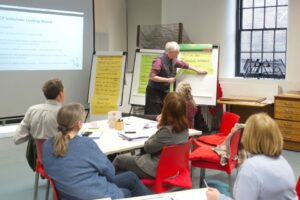
We’ve already seen the impact that connection and peer support can have through the first in-person gathering for the Leadership Capacity Cohort – one of the initial targeted funding strands within Museum Futures. This strand directly tackles the lack of capacity to focus on strategic development by freeing up leadership time. 17 museums across Scotland are benefitting from this support, with the participating leaders coming together at Edinburgh Printmakers to build relationships, share experiences, and explore common challenges and potential solutions. Going forward, the cohort will also have the opportunity to attend further workshops in person and online, as well as receive coaching and other opportunities for knowledge exchange.
By strengthening connections and encouraging collaboration, the Museum Futures programme is helping to build confidence and support more sustainable approaches to change!
Funding awards
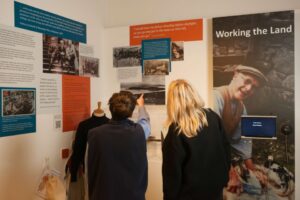
During year one, we distributed £3,503,011 through the Leadership Capacity fund, our Innovation and Unlocking Potential funds, as well as microgrants and pathfinder pilots. We are excited to see the impact of these funding awards and share some of these stories with the wider sector soon.
Examples include The Museum of Lead Mining which was awarded a grant through the Innovation Fund to install a water source heat exchange system, harnessing the water from a nearby burn, which receives warm water draining from the old mines. And there’s Ullapool Museum which also received an Innovation Fund award, to develop an engagement programme to strengthen relationships with the travel trade and growing cruise ship market, positioning the museum as a key cultural destination within the region and attracting new audiences.
Microgrants have proved that you don’t need to ‘go big or go home’, giving museums a low-barrier way to test ideas and turn small changes into practical outcomes. Museums can dip their toes in the water, de-risking experimentation and growing their confidence and capability. Some stand out examples include improved visitor amenities, interactive staff training, improved contactless donation systems, enhanced displays and signage, pilot events, financial hardware and IT upgrades, cyber security and resilience measures, and improved outdoor events for community outreach.
Evolving partnerships and funding
In year two, we’re looking forward to working more closely with our colleagues at The National Lottery Heritage Fund and encouraging more joint applications for larger grants. This will enable us to help more organisations to unlock their potential and work more innovatively. We’ll also focus on developing further pathfinder pilots, exploring new, collaborative models of working.
We’re taking a short pause in grant-making in April 2026 to reflect more on what we have learned in year one with our evaluators and key stakeholders. This will help us shape the best approach for year two that truly meets the needs of the sector. Alongside this, we’ll continue to evolve the wraparound programme – making sure it stays responsive to the challenges and priorities emerging across the sector. We’ll be working hard to identify and develop new partnerships to help deliver this.
The Organisational Health Checker
We’ll continue supporting museums to engage with Museum Futures by completing the programme’s diagnostic tool specifically developed for the programme – our Organisational Health Checker (OHC).
We’ve been encouraged to see museum teams taking the time to work through the checker together, using it as an opportunity to reflect on what is working well and where further support is needed. Over the course of this first year, more than 100 museums have undertaken an organisational health check, demonstrating a real commitment to reflection and improvement across the sector. This health check helps organisations identify issues and priorities early, ensuring that targeted support is more relevant, while also enabling museums to focus their own resources more effectively and build a stronger foundation for improvement.
Following feedback from museums, we are in the process of digitising the OHC to make it more accessible and easier to complete. So, watch this space!
Looking ahead to year two
I see this as the beginning of a longer journey towards a more sustainable sector. The foundations are in place, but how the programme evolves will continue to be shaped by the needs and insights of Scotland’s museums and galleries themselves.
We’re incredibly grateful for the positive engagement so far – and we recognise that embracing new ways of working hasn’t always been easy. It’s encouraging to see so many organisations already making progress towards sustainability and growth.
As we move forward, we’ll keep listening, adapting, and responding. Year two will focus on building deeper relationships, strengthening trust, and offering more tailored support around the key challenges facing the museums of the future. We’ll also continue to test and refine our approach, so that what we learn can be shared more widely across the sector.