Culture Secretary celebrates year one success of Museum Futures programme
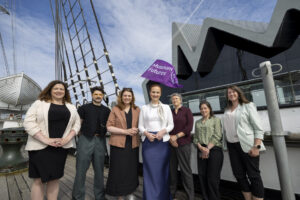
During her visit to The Tall Ship, Culture Secretary, Màiri McAllan unveiled the first-year evaluation report of the Museum Futures Programme, which has provided £3.5 million in funding to 58 organisations through 94 grants since its launch in July 2025.
The Year One evaluation report shows that Museum Futures is helping Scotland’s museums move beyond day-to-day survival and build stronger foundations for the future. The report, published one year from the programme launch, indicates that museum leaders are gaining the time, confidence, and organisational capacity needed to build long-term resilience.
During the visit, the Culture Secretary heard from programme partners about the impact of Museum Futures on the sector so far and the aims and ambitions of the programme as we move into year two.
Museum Futures was developed in direct response to the significant challenges faced by the sector and aims to create new pathways to support the innovation needed to transition to a more sustainable way of working, while removing some of the risks of trying something new. The programme has been created in partnership by the Scottish Government, Museums Galleries Scotland and The National Lottery Heritage Fund.
Open to both Accredited and non-Accredited museums, the programme compromises of five open and targeted funding streams supporting sector innovation as well as leadership capacity and organisational development. Wraparound support includes diagnostic tools, external training offers, consultancy services and peer to peer learning opportunities.
Key highlights in year one of Museum Futures:
- The programme has supported 58 organisations through 94 grants, totalling £3.5m, alongside a comprehensive wraparound support offer that benefitted 110 organisations
- The programme has achieved national reach across all regions of Scotland
- The National Lottery Heritage fund has invested £770k in match funding and in the wraparound support programme through access to consultancy services and valuable expertise assisting programme development and evaluation
- Around a third of the eligible sector has engaged with the programme, with many organisations accessing multiple strands of support best suited to their needs
Culture Secretary Màiri McAllan said:
“The Museum Futures programme reflects the Scottish Government’s commitment to helping our museums flourish, having listened to the sector about the challenges it faces.
“Local museums in particular bring the stories behind their communities to life, and this programme supports innovation and collaboration to ensure their long-term sustainability.
“From trialling a new form of renewable energy at the Lead Mining Museum to developing dark history experiences at Jedburgh Castle Jail, this evaluation shows a strong foundation to test new ways of working in the first year. I look forward to seeing where we go from here to bring Scotland’s past into the present in fresh and exciting ways.”
Lucy Casot, CEO of Museums Galleries Scotland said:
“This initial year has allowed us to set the groundwork for future success and the evaluation confirms something we have long understood: Scotland’s museums have the ambition, creativity and commitment to innovate, but too often they have lacked the capacity, resources, and support to turn those ideas into lasting change. Museum Futures is beginning to change that.
By investing in museums, we’re enabling them to play an even greater role in strengthening communities, supporting learning and skills, driving local economies and tourism, improving wellbeing, and protecting the heritage and stories that connect people and places across Scotland. It is also important to acknowledge that while the progress is positive, it remains fragile, and continued investment is essential to maintaining momentum.”
What the evaluation tells us
The report highlights strong early progress and clear validation of the programme approach:
- A strong, sector-endorsed model: Museums value the programme’s “whole organisation” approach that focusses on strengthening foundations and supporting innovation where appropriate through a combination of financial and non-financial support
- Relational delivery is key: The relationship-led model between Museums Galleries Scotland and participating museums is the highest-rated element of the programme, enabling trust, openness, and more meaningful support
- Diagnostic work is driving change: Tools such as the Organisational Health Checker are already helping museums clarify priorities and take action (with 96% of survey respondents reporting positive impact)
- Clear sector demand and appetite for innovation: The programme has surfaced strong demand, with many organisations seeking resource to develop existing ideas. 41 of 70 survey respondents had tried a new approach in the past 12 months and 23 of 70 were planning to
- Leaders are supported to think strategically: The majority of Leadership Capacity Fund recipients report increased ability to focus on strategic priorities where previously inhibited by operational pressures

Examples of funded projects
A wide range of projects have been supported, illustrating the breadth of the programme:
- A shared staffing model pilot for rural museums in the Highlands, helping organisations collaborate, strengthen resilience and develop new income streams to improve future sustainability
- Scoping feasibility of a shared collections store in the Tayside region, improving access to collections and long-term sustainability
- Creation of a heritage skills hub in Whithorn, supporting training, community engagement and traditional skills development
- Investment in low-carbon infrastructure, such as a new form of renewable energy at the Museum of Lead Mining
- New income-generating visitor experiences, including immersive interpretation and tourism-focused engagement programmes
Overall Museum Futures demonstrates that investing in organisational resilience, not just individual projects, creates stronger outcomes. The evaluation provides evidence that this model is working, giving museums the capacity to innovate, adapt and strengthen their contribution to education, wellbeing, local economies, tourism, and community life. It shows that investing in resilient museums is ultimately an investment in more resilient communities.
Building on the learning from the first year, programme partners will now continue the programme into a second year, supported by the Scottish Government’s commitment to invest a further £4m in 2026/27 alongside continued parallel investment and in-kind support from National Lottery Heritage Fund.
Caroline Clark, The National Lottery Heritage Fund Director for Scotland, said:
“As the largest funder of heritage in Scotland, from our landscapes and parks to historic towns, traditions and culture, we have been privileged to work hand in hand to support, revitalise and celebrate Scotland’s museums for over 30 years. National Lottery players have made possible major transformational redevelopments such as Glasgow Riverside, V&A Dundee and Aberdeen Art Gallery and smaller, but equally important investment, such as telling the nation’s wartime history though Orkney’s Scapa Flow Museum and the Devil’s Porridge at Gretna. But our support for museums goes well beyond the bricks and mortar. We recognise and invest in the skills and organisational infrastructure needed to support museums to change and thrive, ensuring local communities are much more than visitors and bringing a deep value to the places and collections they represent.
“It has been fantastic to see the first year of Museum Futures delivering such a wealth of development opportunities, rooted in the needs of the sector, supported by the knowledge of Museums Galleries Scotland and underpinned by a strong commitment to our cultural heritage from Scottish Government. Supporting staff, leadership and volunteers, funding plans and innovation that will help drive change throughout the country to ensure a resilient, creative and collaborative museum sector in Scotland. ”