Innovative ideas for income generation
This series of photographs and interviews highlights how museums are generating income through innovative visitor experiences that are unique to their location and heritage.
The Museum Futures programme can help support other museums to explore, develop and implement similar innovative approaches.
The Black Watch Castle and Museum
Douglas Walker, Chief Executive Officer
What is the innovative visitor experience you offer?
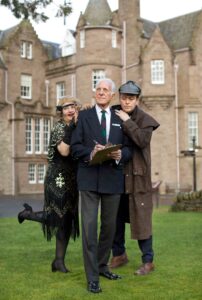
We decided to trial a Murder Mystery Dinner event at The Black Watch Castle and Museum. The aim was to generate valuable income for the Museum and to attract new audiences to engage with our Museum and charity. The evening includes a drinks reception followed by a three-course dinner, alongside an interactive murder mystery performance by actors from the company Can You Catch The Killer. They act out the storyline and remain in character as the suspects, allowing guests to question them and work together at their tables to solve the case.
What led you to develop this offering?
We were looking for new event types to attract different audiences to the Museum. We thought the setting of Balhousie Castle and the Museum would be the perfect setting for an event of this type. By coupling this experience with a dining offer would help generate good levels of additional income to build our commercial performance.
What has been the feedback from visitors?
The event was a sell-out with the full capacity of 80 seats completely filled. Feedback from visitors was extremely positive on the night and everyone left having had a great time. This was a trial event but many visitors asked if we would be hosting more events of this type. As a result of the positive feedback, we have scheduled two further Murder Mystery Dinner events in 2026, with the first in April already on track to sell out and a second planned for September.
What has the impact been to the museum?
The Murder Mystery Dinner event generated valuable income for the Museum which helps build our sustainability. Just as importantly, we welcomed numerous visitors who told us they had never visited The Black Watch Castle and Museum, but now that they had, they would return in the future.
Linlithgow Museum
Jennifer Brown, Museum Co-ordinator
What is the innovative visitor experience you offer?
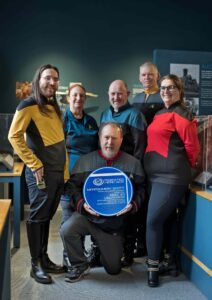
We are boldly establishing Linlithgow as the future birthplace of Montgomery “Scotty” Scott from the globally beloved Star Trek franchise. Our 60th anniversary celebration on 8 September marks the launch of something much bigger: an annual, town-wide event that blends heritage, fandom, science and imagination.
Rather than simply hosting a Scotty exhibit, we are creating a destination experience with the museum at its heart. By embracing this unique cultural connection, we are transforming Linlithgow into a place where visitors can explore the intersection of local history, science fiction and the future.
How does it relate to the museum’s collection and local history?
Linlithgow Museum is home to a blue plaque commemorating the birth of a fictional character: Montgomery “Scotty” Scott, born in Linlithgow in the year 2222. The plaque exists thanks to renowned screenwriter and author D.C. Fontana, who referenced Linlithgow in her novel Vulcan’s Glory.
This link between a real historic town and a fictional future gives us a rare opportunity to connect local heritage with global popular culture.
What inspired you or led you to develop this offering?
We love Star Trek, but more importantly we recognise its power to inspire. Its themes of optimism, diversity, innovation and collaboration align closely with our museum’s values.
This connection opens exciting possibilities. It allows us to link popular science fiction culture with real-world STEM engagement, creating opportunities to explore space exploration, engineering, technology and scientific discovery through the lens of imagination. For us, it’s a creative gateway to future-focused learning.
What has been the feedback from visitors?
We regularly welcome Star Trek fans from around the world who travel specifically to see the plaque and take photos with it. Locally, people love the pride and fun it brings to the town.
Our recent engagement with the Starfleet International fan club and its Scottish chapter, USS Alba, has shown us just how enthusiastic and supportive the fan community can be. Whenever we post anything about Scotty or Star Trek on social media, engagement rises dramatically — the appetite for this connection is huge.
Because Star Trek is a US-based franchise and exhibitions are relatively rare in the UK, Linlithgow offers fans here a unique and tangible place to connect with their favourite show.
What has the impact been on the museum?
This initiative has expanded our audience internationally, strengthened community pride and created new relationships across fandom, academia and science communities.
Perhaps most importantly, it is positioning Linlithgow Museum as ambitious, creative and future facing. By embracing a fictional character born in 2222, we are using imagination to think differently about heritage, learning and the future — and we are only just getting started.
Grantown Museum
Suzi Wilson, Costume Maker
What is the innovative visitor experience you offer?
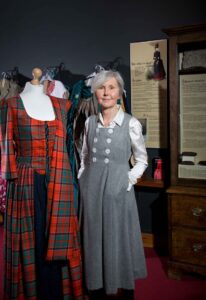
“Adventures in Costume” – a 1 hour or half day (on location) experience being dressed and photographed in authentic 18th, 19th, or early 20th century costumes, including appropriate undergarments such as corsets and crinolines.
How does it relate to the museum’s collection and local history?
We began with Georgian and Victorian costumes that connect to our town’s story, which we feature in our permanent display at Grantown Museum. Then we have traditional highland costumes and Clan Grant-related clothes; some are more for fun and make for a good photo!
What led you to develop this offering?
The project started during the covid lockdown that was something to keep me busy that would benefit the museum. The museum had a small dress up area, but I thought it could be expanded to include a wider range of costumes. I started by making a dress for a child from an original Victorian pattern and it snowballed from there. I expanded the offering to include 18th and 19th century ball gowns in silk and taffeta and then also costumes for men. The museum gets a lot of foreign visitors who are “Outlander” fans, so I tailored some of the costumes to specifically appeal to those visitors.
What has been the feedback from visitors?
People love the authenticity and quality of the garments – from the luxurious silks and satins right down to the handmade buttons. People also love feeling what it’s like to be held up by all the undergarments that make you move so differently, it’s such a unique experience. They are then photographed and have an unforgettable memory of their visit to the museum.
What has the impact been to the museum?
We have another small but significant income stream from people who may not have visited or found the museum if it weren’t for the costumes. The costumes provide another layer of online presence, making us visible to different audiences. We find that the costumes attract the attention of academics, researchers, the media, and costume lovers. Plus, we have the physical asset of a group of lovely high-quality replica costumes to use and display.
The Highlanders' Museum
Sarah Tinto, General Manager
What is the innovative visitor experience you offer?
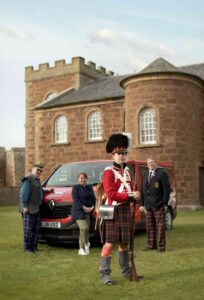
We offer ‘The Highlanders and Jacobite Tour’ , a 1 day minibus tour experience following in the adventurous footsteps of the Highland Clansmen. We bring to life the local history of Inverness, regale the stories of the Clans and the Jacobite rebels who became some of Britain’s finest soldiers. The tour includes a trip onboard a Jacobite cruise on Loch Ness, and visits to historic Inverness, Clava Cairns, Culloden Battlefield and of course Fort George and The Highlanders Museum.
How does it relate to the museum’s collection and local history?
The tour revolves around the local history of the area (Inverness-shire) paying particular credence to the Jacobite rebels and their progression into the antecedent regiments of our museum. The history and stories given throughout the tour follow the history of the regiments and cumulate in the museum here at the Fort with the Collection of artifacts and archives that we care.
What led you to develop this offering?
Our staff and volunteers are extremely knowledgeable regarding all aspects of the history and artifacts of the regiment history we preserve and also the surrounding local area history. They all love sharing their stories, experiences and knowledge with both local residents and tourists alike.
We also had a need within the Museum to create a new, innovative and sustainable additional stream of unrestricted funds. What better way to bring in funds, create enthusiasm and promotion for the museum than to let the volunteers and staff bring the museum and local history to life in person whilst driving and walking around the highlands and places of interest in Scotland as personal guides to tour groups.
What has been the feedback from visitors?
All our feedback has been amazing.
“This tour was a highlight of our trip. John and Kenny, our tour guides, went out of their way to make sure we experienced everything we wanted to, and they did so, with the utmost professionalism and a great spirit and sense of humour. Both were retired Highlander’s and volunteer at the museum so their knowledge of the history, traditions and culture was exceptional. I would highly recommend this tour and, as it is offered through the museum, it supports a great enterprise. A don’t miss experience, especially if you are interested in the history of the Highlands and the Highlanders.”
What has the impact been to the museum?
The provision of the tours has opened a new income stream for the museum, giving us invaluable additional unrestricted income. It has also increased our publicity and marketing in the local areas as our minibus is fully branded with the Museum logo, contact details and eye-catching graphics.
Paxton House
Hermione Hoffmann, Chief Executive
What is the innovative visitor experience you offer?
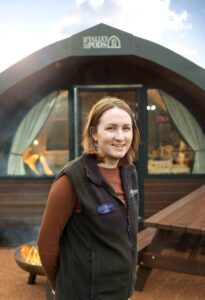
We have added some glamping pods at Paxton House to diversify our income streams, ensuring that we are working towards a financially sustainable future.
How does it relate to the museum’s location?
The pods are located in our designed landscape and close to the river Tweed. We have developed a Heritage trail which links the pods within the wider context of the house, the estate and the history of it. The names of the pods were taken from the local farms historically owned by the family of the house.
What led you to develop this offering?
We did a huge amount of research and feasibility work, worked with South of Scotland Enterprise (SOSE) to ensure that the project developed was the right fit for Paxton. We had tried glamping before and so had learnt some valuable lessons from this which helped inform what to do this time. This was part of a wider piece of work to increase and improve all of our staycation options, including doubling the caravan park and landscaping it, adding new holiday lets to the portfolio, and increasing opportunities for people to stay and interact with the site in different ways.
What has the impact been to the museum?
We are already seeing a wide demographic of people enjoying the pods. It is too early to tell what the financial benefit has been to the museum, as we only launched at the end of Autumn 2025. We are monitoring and reviewing the pods regularly. We noted a small positive contribution to the revenue for 2025 and are looking forward to seeing what 2026 holds in store.