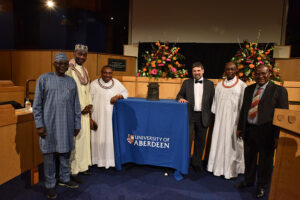
Māori Taonga in Scotland: A story of reconnection
When the new Perth Museum opened in March 2024, its display of taonga Māori marked the latest chapter in a twenty-year relationship between Culture Perth & Kinross, Te Papa Tongarewa, and Victoria University of Wellington. Members of the Māori curatorial team and Perth Museum’s collections officer reflect on the collaboration and the work of reconnecting taonga held far from home with their descendant communities.
Return (And Other) Stories is a series of stories which aim to make the ideas and processes of Restitution and Repatriation more accessible to museum workers and those interested in the topic.
Repatriation is a crucial part of decolonising initiatives and a clear way in which we can actively lead change, consider and reimagine the role of museums and galleries in understanding and addressing legacies of Colonialism, Slavery and Empire.
Content Warning: this story discusses colonial history and its ongoing impact on Māori communities. It includes descriptions of ancestral remains held in museum collections
Introduction
This story has been written after a period of reflection, following the co-production of a decolonisation gallery as part of the new Perth Museum. The Museum opened in March 2024. The Gallery in question seeks to start a debate about the colonial inheritance embedded in the Museum’s collections, largely through the 19th century collecting of the Literary and Antiquarian Society of Perth.
It highlights a number of collections from the Pacific and its seaboard to shed light on the colonial acquisition processes. The most significant amongst them is the selection of Māori taonga. This had a long genesis going back 20 years and more to the return of Māori human remains from Perth to Te Papa Tongarewa (the National Museum of New Zealand/Aotearoa). Phases of co-curatorial research followed and in the early 2020s Culture Perth & Kinross (managers of Perth Museum on behalf of Perth & Kinross Council) and Te Papa agreed a Memorandum of Understanding setting out how they would work together to better (i.e. collaboratively) understand and manage the Māori taonga in Perth Museum.
This in turn facilitated a team of Te Papa curators (Dougal Austin, Migoto Eria and Amber Aranui) along with Awhina Tamarapa (University of Wellington) to travel to Perth and lead on the selection and interpretation of the taonga to be displayed in the new Museum.
This story aims to share the reflections of the Māori team members along with a little contextual setting from the Museum.
Awhina Tamarapa, Curatorial and Cultural Advisor
These are some of my experiences entering international museum storerooms. As an Indigenous museum worker with over 30 years of experience, it never gets any easier. In some respects, the visits become harder.
Imagine being led through the back of a museum where only staff are permitted. Walking through a maze of corridors, walls lined with taxidermy, frozen grimaces, and lifeless eyes. The air sucks in a breath as you enter a small, enclosed storeroom. There, wrapped in plastic, are rows upon rows of taonga, neatly arranged. It is quiet, like a mortuary. Wall-to-floor compartments slowly rolled apart, revealing stacks of boxes, contents carefully numbered and labelled. You wonder how a piece of who you are can end up in a distant place like this. You feel overcome with sadness. Then loneliness. Every museum visit is the same. Conflicted.
Tamarapa 2024,173
Why do I think that? Despite years of energetic collaboration between museum institutions and outstanding staff, has there been any structural change? Are there still “pieces of ourselves” held by museums – without community connection, history, or meaning? Are there any governance and staff positions from descendant communities with cultural expertise to help these museums achieve the shifts required? How do we ‘walk the talk’? Years of inertia, of incremental change in the glacial pace of museums, of ‘one step forward and two steps back,’ have turned months into years. That’s why it’s hard. And disappointing.
This piece of writing ebbs on the tide of a long-term relationship between the Perth Museum, Scotland, and the Museum of New Zealand Te Papa Tongarewa. The first engagement was the repatriation of Māori ancestral remains in 2005, initiated by the Karanga Aotearoa Repatriation Programme. Mandated by the New Zealand government and supported by iwi (Māori tribes), the programme has returned over 850 ancestors from museums overseas. This is an important process for institutions to rectify past colonial practices that dehumanised our ancestors and recategorised our culture according to Western, scientific classifications. Following closely behind was the perceived rescue work of museums, to preserve the specimens and objects of a so-called ‘dying race.’ This racist trope was popularised by 19th-century colonists in New Zealand, who believed that it was inevitable that Māori would be absorbed into the superior Western culture.
To Māori, taonga is an all-encompassing term for anything of significant cultural value. From tribal history, land, airwaves, language, knowledge, and data, taonga are precious to our cultural essence and identity. The foundational living document of Aotearoa, Te Tiriti o Waitangi (the Treaty of Waitangi), was first signed on 6 February 1840 at Waitangi, Bay of Islands. 500 Māori chiefs around the country signed the Māori text, acknowledging their independence and autonomy. The English text of Te Tiriti states the opposite. Through time, the Crown and successive governments have both ignored and breached Te Tiriti agreements, leading to the colonisation of Māori people and the issues we have today.
Museums of the eighteenth and nineteenth centuries have been described as systemic colonial imperialism (Gallagher 2010; Smith 2012). The glib descriptions of ‘material’ and ‘objects’ collected since the first voyage of James Cook in 1769 found their way into private and public hands. The flow of ancestral taonga from their tribal homes took many journeys. As transactional exchanges between European explorers, missionaries, sealers, and whalers, as items for sale, and as gifts to honour relationships.
With this background, the situation of overseas museums holding an unknown amount of ancestral Māori heritage leaves us with the work of not only untangling what we do know, but also of fronting up to what we don’t know.
What we don’t know are the deeper historical and cultural narratives of the taonga that are wrapped in plastic and boxes in the storerooms. What we don’t know are connections to descendants. Generations have never had the means or inclination to access museum storerooms in Aotearoa, let alone overseas. What we could learn is how to let go, how to be self-flexive as museum people, and how to critically examine the structural power dynamics that are at play.
The relationship between the Perth Museum and those of us in Aotearoa New Zealand who have vested interests in the taonga collections has been long, yes, but fruitful. Underlying every exchange has been the willingness of the Perth Museum governing board and staff to treat our ancestors, taonga, and customs with respect. Ancestors have been returned, Māori researchers have been hosted, publications written, an MoU between Te Papa and Culture Perth and Kinross as the governing body of the Perth Museum was signed in 2022, Museum and Heritage Studies students from Victoria University of Wellington undertook case studies, exhibitions were created collaboratively across the world, and a new museum opened. A fair amount of work over a period of twenty years, thanks to the belief and commitment of key staff.
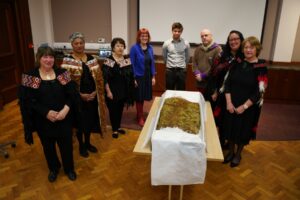
On the week of opening the new Perth Museum in March 2024, a group of us went for a coffee break in an elegant downtown cafe. Joining me were Perth Museum Officer Mark Hall, Conservator Ana Zwagerman, and prominent Māori Scots community leader based in Perth, Ereti Mitchell. We had time to reflect on the magnanimous work, and inevitably – the golden question – where to from here?
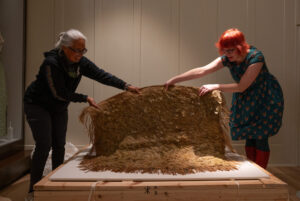
The topic of discussion was the future of the Kahu Kākāpō, carefully conserved and about to go on display in the new museum. As the only full kākāpō feather cloak known, it is extremely significant. To add to its rarity, the Kākāpō is the only flightless parrot in the world and is critically endangered. This taonga is extremely precious, yet its exact story and connection remain unknown.
We talked about the possibility of the Kahu Kākāpō returning to Aotearoa. In our minds, this made perfect sense. Physically, the cloak has been meticulously and lovingly conserved by world-class professionals. Culturally, this work has been guided by tikanga (Māori principles) and kawa (protocols), thanks to Ngāti Ranana Māori Club based in London and Whaea Ereti Mitchell. They maintain an important role as kaitiaki (custodians) for taonga far from home and uphold mana (authority) where needed. There is already a purpose-built containment for the cloak to travel. The cloak must be rested from display light levels after a period of time. It has been two years since the new museum opened. Mark Hall and Anna Zwargerman are essential staff, but what happens when they leave?
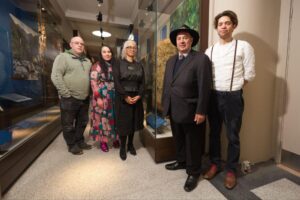
An important aspect of the partnership was the ever-widening circle of involvement. Pitcairn Norfolk Island artist and scholar, Dr. Pauline Reynolds, was also working with the Perth Museum. Her practice involved recreating parts of an impressive Tahitian mourning costume for the new Perth Museum display. Ngāti Ranana and Ereti Mitchell supported the Kahu Kākāpō work. Te Kenehi Teira and his daughter Kararaina Te Ira, descendants of Captain Jock McGregor, originally from Perth, were cultural advisors for the opening of the Māori section of the new display gallery. They also undertook key roles in the ceremonial rituals for the taonga displays. Their inclusion as community descendants opens up possibilities far beyond the transitory nature of museums. Māori fundamental values, such as whakapapa – genealogical connection, whanaungatanga – community, manaakitanga – caring for people, and kaitiakitanga – custodianship, are enacted as a pathway to restitution and healing.
In conclusion, the question of ‘where to from here’ remains open. We talked about so many positive plans. These included collection database research, artists’ workshops, and descendants’ visits, all enfolded within the MoU commitment between Te Papa and the Perth Museum. The questions raised are intended to prompt action. I ask, how can we “walk the talk”? I have outlined the activities that many people have contributed to, and thank them for their efforts. But, while there remain “pieces of ourselves” held by museums, there is much work still to do.
Dr Amber Aranui, Curator Māori, Te Papa Tongarewa
As a Māori curator within a national museum, I am always conscious that thousands of taonga Māori are held in institutions across the world, often far from the communities, landscapes and whakapapa that give them life. That distance is felt deeply. There is a quiet wondering about whether they are being cared for in ways that honour their origins, whether their stories are being told with integrity, or whether their connection to home has been dimmed over time.
Collaborations like this one with Perth Museum offer a moment of reassurance. They remind us that although taonga may be dispersed globally, their relationships with people, place and story can still be nurtured. This shows that all is not lost, that reconnection is possible when institutions commit to working in genuine partnership.
Having worked in the repatriation space for almost two decades, I know that meaningful relationships are at the heart of any ethical museum practice. This project was no exception. Taking the time to understand one another’s perspectives, responsibilities, and aspirations created the foundation for open, honest conversations about the taonga, the narratives we wanted to share, and the outcomes we hoped to achieve. It was a process grounded in trust, respect, and shared purpose.
For me, this collaboration also carries a personal resonance. I have whakapapa (genealogical) connections to Perth, and standing in that place, working with taonga from home, felt like weaving together histories, identities, and responsibilities. It made the development of these displays not only professionally meaningful, but deeply personal.
This project reaffirmed the importance of global relationships in the care of taonga. Working with colleagues in Scotland demonstrated that distance does not diminish responsibility. Instead, it highlights the shared commitment we have, across cultures and institutions, to ensure taonga are understood, respected, and connected back to their people. These taonga hold layers of meaning. For Māori, they are whakapapa, living connections to ancestors, places, and histories. For Perth Museum and its community, they are a part of a shared history of encounter and exchange. By weaving these perspectives together, we were able to create displays that honour both the cultural origins of the taonga and the local histories that shaped their presence in Scotland.
Storytelling is collective work. It requires humility, patience, and a willingness to listen, not only to each other, but to the taonga themselves. This collaboration brought together expertise in curation, conservation, community engagement, and mātauranga Māori. Each person contributed something unique, and together we crafted narratives that were richer and more nuanced than any of us could have created alone.
Not every taonga can return home immediately, but their knowledge can. Sharing kōrero, whakapapa, and cultural context ensures that taonga are not left silent. It restores their identities, strengthens their relationships with home, and supports their institutions that care for them to do so in culturally grounded ways. Cultural return becomes an ongoing process, one that benefits both Māori communities and international partners.
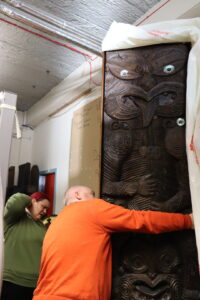
This project showed how digital tools, virtual wānanga, and sustained communication can make meaningful collaboration possible across distance. It opens the door for more international partnerships, more reconnections, and more opportunities for taonga to be understood in ways that honour their origins.
This work also highlighted the long-standing links between Scotland and Aotearoa. Many Māor have Scottish whakapapa, and many Scottish families have histories intertwined with ours. These connections shaped the lives of our ancestors and continue to shape our identities today. For me, with whakapapa ties to Perth, this project felt like a full-circle movement, a chance to stand in both worlds and contribute to a story that belongs to all of us.
In many ways, this collaboration is the natural next step in the long arc that Mark Hall began this piece with, an arch shaped by repatriation, relationship-building, and a shared commitment to doing better by the taonga in Perth’s care. The dawn ceremony, the new displays, and the work behind them are not isolated moments; they are part of an ongoing journey between our institutions and our peoples. For us as Māori curators, this project reaffirmed that when partnerships are grounded in trust, respect, and genuine cultural exchange, taonga can continue to speak with clarity and dignity, even when they are far from home. It is this spirit of collaboration – past, present, and future – that gives us confidence that the stories of these taonga will continue to be honoured on both sides of the world.
Dougal Austin, Curator Māori, Te Papa Tongarewa
As a Māori curator at Te Papa – and perhaps also having the right name for the job – I was fortunate to participate in efforts to assist Perth Museum, Scotland, in the curation of their exhibits of taonga Māori. My area of speciality is pounamu, our Indigenous jade, also called greenstone.
I think it‘s fair to say that Indigenous cultural material held in museums overseas is largely a product of colonial legacy. For a long time many taonga have resided far from their people and culture of origin and have been largely disconnected from the original cultural understandings and context which gave them meaning. Instead, meanings have historically been ascribed through the eyes of Western ethnologists and anthropologists, well-intended perhaps, but they have privileged different points of view and ways of knowing.
Our involvement, as a Māori curatorial team, offered a departure from that approach. Collectively in a spirit of building mutual respect and trust we strived to develop the best displays we could, cloaked in Māori ways of knowing and understanding. It has been a form of cultural reconnection for us and a form of cultural reconciliation for all concerned. Together we have helped establish firm foundations for an ongoing relationship and for proceeding forward on a surer footing.
The team approach on the Māori side of the equation seemed sensible, given our different areas of expertise. But it was also sensible because of the increasingly diverse nature of contemporary Māori realities, as highlighted by Māori scholar Te Ahukaramū Charles Royal (2021). Māori today often live outside of the tribal lands of their ancestors. We often form parts of diverse urban communities subject to an array of new ideas and influences unknown in our parent’s or grandparent’s generations. As a team we were able to deliver multiple perspectives more representative of the lived realities of contemporary Māori life.
In parallel, we also drew upon our own tribal backgrounds to best effect, or bought in others where appropriate. For example, team member Dr Amber Aranui invited Ngāti Porou academic Dr Ngarino Ellis to speak with authority about two poupou ‘wall post carvings’ from her tribal area. My own tribal affiliations to the southern land of pounamu – Te Wai Pounamu or the South Island – where all deposits of this stone are found, lent perhaps a higher level of cultural integrity than may otherwise have been the case.
The making of an audiovisual film re-enacting finding pounamu on a river helped ground the long-standing cultural value of pounamu in contemporary reality. Pounamu is still a highly valued cultural treasure for tribal descendants today. A conscious decision was made to wear the kind of rugged outdoors clothes one would typically wear on a pounamu search today, rather than try to re-enact a scene from our ancestor’s time. Thus a message is sent that our culture remains alive and we still carry out some of the cultural activities practiced by our ancestors.
It was deeply gratifying to see the end result of our efforts, and to have the opportunity to attend the opening in Perth and take part in ceremonies led by elder Te Kenehi Taylor, who was charged with ensuring proceedings were conducted in accordance with Māori protocol.
I perceive the benefits of our involvement to be real and of enduring significance. Our involvement offered cultural agency and self-determination to us personally and to the broader Māori culture we represent. And for the host institution it has resulted in displays grounded in cultural authenticity and created what I believe is a valuable relationship.
Migoto Eria-Rowell, Head of Mātauranga Māori, Te Papa Tongarewa
E rapu ana i te ara tika mō tātou katoa Searching for the right path for us all
(from song composition, Te Hokinga Mai written in 1986 by Te Tāite Cooper and Bishop Takuira Max Mariu)
This mahi reminds me of the journey of the Te Maori exhibition in the 1980s when, for the first time, a whole lot of taonga Māori from all over New Zealand had travelled for exhibition display at the Metropolitan Museum of Art in New York. I mean, I wasnt there of course because I was 3 years old, but what I want to emphasise is the resonating nature of this event even to this day, the impact of taonga Māori for Māori people, and most of all, that it took for taonga Māori to travel overseas for there to be or known as a significant cultural awakening for many Māori people back here in Aotearoa New Zealand.
Over 45 years later, we continue on the right path that is beneficial for us all in regards to taonga and mana motuhake Māori (Māori self-determination). And since this event, much has changed in the museum scene here in Aotearoa particularly pertaining to taonga Māori and museums working alongside Māori people. What I’ve come to truly appreciate is in and amongst these changes is how far we’ve come since the likes of 1986. We now have Māori who are curators, collection managers, researchers, scientists, and also museum directors and managers. How quickly Māori people have moved into these spaces and become specialists in their own areas of knowledge breaks down the barrier and closes the gap between taonga Māori and their uri whakatipu (descendants). I feel this significant progression needs to be recognised, a critical step to avoid reinventing the wheel. Further to this is the ability of these Māori professionals to now communicate with and travel to institutions overseas. Accessibility of technology and tools to be able to carry out and continue this work has become much easier.
However a significant part of what makes projects like this successful, is the willingness and determination of all participating parties. I would like to acknowledge the drive and vision of both Awhina and Mark to realise this potential. And without this potential, I certainly would not have known or supported, or been offered the privilege of being able to participate and contribute. The moving parts of operations that go unseen, I’d like to acknowledge that too. The back and forth of online teams meetings, early mornings, late nights, managing families in the background. Success wouldn’t be what it is without all these factors: each individual person’s time, commitment and contribution. A large driver for me was the freedom to be creative as a Māori curator, owning our ideas and seeing it through to fruition. It became less about being work and more about doing justice to the kaupapa, the taonga, and the mahi we’re now able to do in this day and age.
Realising the potential of a taonga Māori collection is very exciting for a curator. I was able to visit the collections at Perth Museum back in 2022 with Amber when we were traveling in Europe at the time. We also got to see the construction site at the museum and visualise the exhibition space.
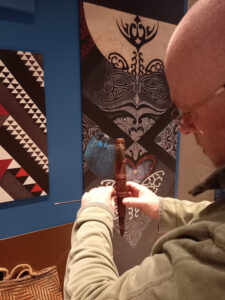
Seeing taonga up close and being in the collections store was a real privilege. We’re often reminded how long it has been since someone Māori has been able to admire and see these taonga and better, to see their potential for the upcoming exhibition. One of my favourites I’d seen immediately after entering the collections store was a tewhatewha. It caught my attention, and I went in for a closer look. Turns out this was one taonga that eventually made it on display in the weaponry case.
And amongst the many taonga Māori we were able to see, was also the amazing Kahu Kākāpō. You can see, we were pretty happy about this experience.
Prior to exhibitions being delivered and opened is all the work that happens behind the scenes. Taonga Māori and collection items don’t just get put on display, as easy and simple as that may be. Tēnā rawa atu koe whanaunga: Big thanks to Awhina’s leadership, we had many meetings discussing our curatorial approach, sharing and testing ideas and thoughts, addressing concerns and challenges. Each of us was assigned to an area of the taonga Māori collection, and I was very happy to be able to take care of the weaponry case.
And same goes for placement of taonga into a display case. We work through things like orientation, the best view for the visitor, cultural considerations (because there is a correct and incorrect way for them to be placed) but most of all, ensuring the display and experience is appropriate from a Māori perspective. I had sought feedback from the wider Māori curatorial team at Te Papa about this layout, and what you see here is the final version.
Alongside the taonga display cases and labels we were also able to create an audio visual component to our interpretation. This for me was integral in being able to include te reo Māori (Māori language) for the purpose of bringing a Māori voice to the exhibition. Hearing the language of our ancestors I believe breathes life into an exhibition experience and better, brings a real context to the taonga on display: that Māori as a people, our cultural practices, customs and language are very much alive and well.
One rainy morning I’d met Dougal down at The Armoury recording studio to record our sound files for our audio visuals. You can’t see much in that image, but doing this sort of thing is fun, and we get to be creative and imagine into a space that at the time, didn’t exist yet. The script that I used and also other footage I sourced for my audio visual I’d sought guidance and support from mau rākau (Māori weaponry arts) expert Wetini Mitai-Ngatai. If you watch the audiovisual and see a fearsome warrior wielding a spear, that is him.
I mentioned earlier on, the success and also enjoyment of this project being due to the drive and vision of Awhina and Mark, thank you both, and also the open willingness and determination of our teams. A real dream team project, thank you all so much for the experience. I look forward to being able to return to Scotland and visit the museum in the near future.
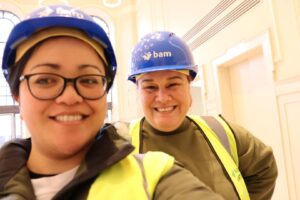
Realising the potential of a taonga Māori collection is very exciting for a curator. I was able to visit the collections at Perth Museum back in 2022 with Amber when we were traveling in Europe at the time. We also got to see the construction site at the museum and visualise the exhibition space.
Seeing taonga up close and being in the collections store was a real privilege. We’re often reminded how long it has been since someone Māori has been able to admire and see these taonga and better, to see their potential for the upcoming exhibition. One of my favourites I’d seen immediately after entering the collections store was a tewhatewha. It caught my attention, and I went in for a closer look. Turns out this was one taonga that eventually made it on display in the weaponry case.
And amongst the many taonga Māori we were able to see, was also the amazing Kahu Kākāpō. You can see, we were pretty happy about this experience.
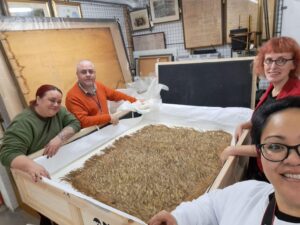
Prior to exhibitions being delivered and opened is all the work that happens behind the scenes. Taonga Māori and collection items don’t just get put on display, as easy and simple as that may be. Tēnā rawa atu koe whanaunga: Big thanks to Awhina’s leadership, we had many meetings discussing our curatorial approach, sharing and testing ideas and thoughts, addressing concerns and challenges. Each of us was assigned to an area of the taonga Māori collection, and I was very happy to be able to take care of the weaponry case.
And same goes for placement of taonga into a display case. We work through things like orientation, the best view for the visitor, cultural considerations (because there is a correct and incorrect way for them to be placed) but most of all, ensuring the display and experience is appropriate from a Māori perspective. I had sought feedback from the wider Māori curatorial team at Te Papa about this layout, and what you see here is the final version.
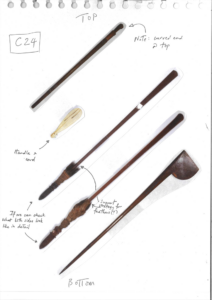
Alongside the taonga display cases and labels we were also able to create an audio visual component to our interpretation. This for me was integral in being able to include te reo Māori (Māori language) for the purpose of bringing a Māori voice to the exhibition. Hearing the language of our ancestors I believe breathes life into an exhibition experience and better, brings a real context to the taonga on display: that Māori as a people, our cultural practices, customs and language are very much alive and well.
One rainy morning I’d met Dougal down at The Armoury recording studio to record our sound files for our audio visuals. You can’t see much in that image, but doing this sort of thing is fun, and we get to be creative and imagine into a space that at the time, didn’t exist yet. The script that I used and also other footage I sourced for my audio visual I’d sought guidance and support from mau rākau (Māori weaponry arts) expert Wetini Mitai-Ngatai. If you watch the audiovisual and see a fearsome warrior wielding a spear, that is him.
I mentioned earlier on, the success and also enjoyment of this project being due to the drive and vision of Awhina and Mark, thank you both, and also the open willingness and determination of our teams. A real dream team project, thank you all so much for the experience. I look forward to being able to return to Scotland and visit the museum in the near future.
Mark A Hall, Collections Officer, Perth Museum
This set of reflections on the collaborative ventures between Te Papa Tongarewa, the University of Wellington and Perth Museum (Culture Perth & Kinross) reveals, we hope, the depth and warmth of that relationship which has at its heart reconnecting the taonga held in Perth with their descendant, ancestral families (see the opening Dawn Ceremony: Whiria Kia Tina – Making Reconnections – Perth Museum). The collaboration has been developing for over twenty years, initially through the work of Awhina and me. It has mushroomed from the return of the kōiwi tangata, through research collaboration, the forging of the Memorandum of Understanding and the creation of the new display of taonga as part of the new Perth Museum (on the latter see Aranui et al., 2025).
For me, at a personal level, the underlying driving force in all these ventures is the natural justice owed to Global Majority Peoples in regaining their cultural inheritance. The rightness of this seems undeniable but of course that does not always mean that the resources to back it up are there. It also does not mean that museums have to ignore their due diligence around collections status – I have certainly learned not to privilege the history of an object in a collection, and not to privilege its status as a museum object over other facets of its biography. So, I hope that as this issue continues to rightly demand our attention, that more resources (including staff) will be found to drive further physical and intellectual cultural returns. I am confident this will happen as the justice of the case is more widely recognised. Pivotal is to talk and develop trust so that the barriers can be negotiated away. The logic of what has been achieved so far is that the taonga are awake and that home is calling them.
Further learning
Aranui, A., Austin, D., Eria, M., Hall, M. A., Kernohan, K., Reid, J. P., Reynolds, P., Tamarapa, A., Te Ira, K., Teira, Te K., Zwagerman, A. (2025) ‘A Whare Taonga for Perth, Collaborative Pacific Displays for Perth Museum’, Museum Worlds, 13.1, pp. 177-186. Access ‘A Whare Taonga for Perth’ in Museum Worlds (open access).
Tamarapa, A. ‘Whatua Mai te Aho: The Role of Museums in the Maintenance of Māori Weaving as a Living Cultural Practice.’ PhD thesis, Museum and Heritage Studies, Te Herenga Waka — Victoria University of Wellington. Access ‘Whatua Mai te Aho’ at Victoria University of Wellington (open access).
Icon (the Institute of Conservation) has published a case study on the conservation of a rare kahu kākāpō, the only known cloak made entirely from kākāpō feathers, carried out by Culture Perth and Kinross in partnership with the British Museum and Te Papa Tongarewa, with Māori advisors guiding culturally appropriate treatment.
The British Museum blog goes deeper into the conservation process itself, co-authored by the Perth, British Museum and Te Papa teams alongside Māori advisors. It covers the technical detail of stabilising the fragile feather shafts and pōkinikini flax strands, the leaving and welcome ceremonies held with Ngāti Rānana, and how the project fed into a wider DNA research effort on the kākāpō.
Perth Museum’s blog carries a first-person account from Awhina Tamarapa reflecting on the dawn ceremony that opened the new Whiria kia tina taonga Māori display. She sets out the four-year collaboration behind it, the Memorandum of Understanding between Culture Perth & Kinross and Te Papa Tongarewa, and what decolonising practice looks like when origin communities lead.