
Resilience
Financial Resilience
Retail tips for museum shops
Overview
A successful museum shop enhances the visitor experience and generates valuable income. These practical tips are for museums of all sizes to consider when planning their retail space.
Know your audience
- Use visitor data and feedback to understand who is visiting your museum and therefore your shop space.
- Speak to your front of house staff – they hear visitor questions and requests daily.
- Look at what already sells well and what doesn’t. Consider what your audience values and choose products with them in mind.
Reflect your museum's story
- Choose products that reflect your mission, collections or sense of place – think about what makes your museum unique and chose appropriate items to reflect this
- Work with local makers, suppliers and artists where possible – sustainable and more likely to result in unique products.
- For particular products or ranges you can sparingly use label cards to share who made it, why it matters and the connection to your museum or location.
Create a positive environment
- The size of shop space matters less than keeping it tidy, clean and uncluttered – less can be more.
- Think about the shop from visitors’ point of view, what do they see at eye level, how easy is it to navigate the space for everyone, what draws attention?
- Group products by theme or story to help browsing and encourage exploration
Engage and equip staff
- Encourage staff to greet visitors in shop and chat to them in a friendly way if the visitor is receptive.
- Ensure that shop staff understand the product stories and can speak to visitors about them in an informed, confident but not pushy, way.
- Encourage staff to share insights and visitor feedback.
Track, learn, and adapt
- Price with confidence – work back from a desired margin not just choosing prices based on ‘what feels right’
- Keep track of your stock and review stock reports or sales data regularly (monthly works for most)
- If something isn’t selling rethink its placement, story or price then decide whether to discontinue
- Where possible test ranges in small quantities first to manage risk and see what resonates with your visitors
Consider your local context
- Think about neighboring businesses when choosing products – avoid duplication where possible and look for complementary ranges
- Take seasonality into account (for example Christmas, school holidays, local event) and think how this might change your audiences and what products you would want to stock
Consider selling online
- Think about whether an online shop would work well for you considering your location, capacity, audiences and the items you sell
- You can also license your artwork through ArtUk for their online retail platform About the Shop | Art UK Shop
Remember, you don’t need to overhaul everything at once, even small changes (product stories, tidying displays, working with a local artist) can make a big difference.
Further resources
Visit the websites below for further information about developing your retail offer:
Association for Cultural Enterprise: guides, case studies and training courses for cultural retail
Association of Independent Museums: Success Guide for Successful Retailing in Museums
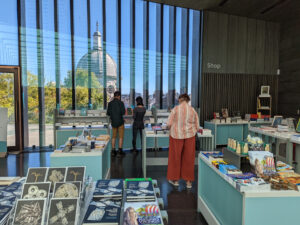
Museum retail at ‘Shop at the Top’
Aberdeen Art Gallery created the new retail experience, Shop at the Top, to support the local creative industry. However experimenting with a new retail experience has had wide reaching benefits.

Resilient approaches in museums across Scotland
We’ve collated a selection of resilience stories from across Scotland’s museums and galleries to highlight some of this work and inspire other organisations. These examples demonstrate collaboration, innovation, skills development, audience development, and entrepreneurial thinking.

Flock to Sock
In this video case study we hear from Museum Development Officer Julie Cave about Glenesk Folk Museum's Flock to Sock project.