£125k awarded to community groups in Scotland to support collaborative work with museums

Today, Museums Galleries Scotland (MGS) announces that £125,000 has been awarded to five community organisations across Scotland as part of the Delivering Change: Community Catalysts programme.
The community groups have each received £25,000 to collaborate on a project with a partnering museum, which will bring underrepresented voices to the fore. The funded projects will focus on co-production, with members of the community groups leading the development and creation of exhibitions and activities.
The community groups and partnering museums are participating in Delivering Change, a programme that supports museums and community groups in restructuring as organisations based on anti-oppression principles. It recognises that museums have played a part in excluding the experiences and histories of many communities in Scotland and supports museums and galleries across the country to make changes that allow everyone to access culture. Delivering Change is delivered by MGS and funded by The National Lottery Heritage Fund, Esmée Fairbairn Foundation, and the Scottish Government.
Israel Garcia, Communities Co-ordinator at Museums Galleries Scotland said:
“We are excited to support these projects that prioritise lived experiences and amplify the voices of communities that have historically been excluded or underrepresented in museum spaces. By fostering these partnerships, we aim to create a dialogue that extends beyond these specific projects and encourages broader co-production and greater inclusion for lasting change.”
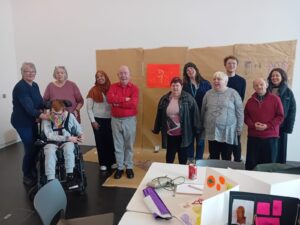
Scottish Commission for People with Learning Disabilities, will work with V&A Dundee to develop a multi-sensory, interactive, and accessible exhibition for a range of people with different abilities, perspectives, and needs. As part of the project development, the group will run a series of workshops for people with learning disabilities to identify materials that will be used and develop design approaches for a fully co-produced exhibition. The project aims to broaden ideas of what accessibility means for the museums and galleries sector and the wider public.
Linda Mitchell, Acting Chief Executive at the Scottish Commission for People with Learning Disabilities said:
“We’re incredibly grateful to Museums Galleries Scotland for supporting this project, which is already making a meaningful impact. By putting people with learning disabilities at the heart of exhibition-making, we’re not only building confidence and creativity, but also challenging exclusion and inspiring change across the cultural sector. We’re excited to work on the next phase of the project in partnership with people with learning disabilities and the V&A Dundee.”
Romano Lav will collaborate with The National Galleries of Scotland to create a physical timeline that traces the roots and ongoing impacts of Roma discrimination, while also celebrating Roma identity and culture. The project aims to educate people on Roma history and culture while dispelling myths and stereotypes that have historically been created and perpetuated through artworks displayed in museum and gallery settings. The first stage of the project will focus on critically interrogating existing artworks and how Roma people are portrayed in them, as well as identifying key moments in Roma history and the achievements of Roma people. These sessions will be co-designed with participants from Glasgow’s Roma community. The completed timeline will be exhibited at the Portrait Gallery in Edinburgh before being permanently displayed at the Roma Cultural Centre.
Ashli Mullen, Creative Director at Romano Lav said:
“We are thrilled to commence this collaborative project with the generous support of Museums Galleries Scotland. Visual representations of Roma in Scotland’s museums and galleries are, as elsewhere, steeped in antigypsyism. Roma are typically depicted in the visual arts as beggars, thieves, child abductors, deceptive fortune tellers, and witches; as generally malevolent, and as a vector for all the ills of majority societies. We are delighted to begin the work of undoing and transforming these representations, co-creating empowering reparative projects that enable real inclusion, while supporting partners to achieve their objective of becoming anti-racist institutions.”

LGBT Youth Scotland is partnering with The Whithorn Trust to highlight LGBTQ+ stories in rural Dumfries and Galloway. This collaboration aims to help LGBTQ+ young people feel represented and engaged in their local heritage. Activities will include capturing and sharing stories of local LGBTQ+ people, archaeology sessions to help the group feel better connected to their local history, and heritage craft sessions where the group can learn new skills and explore career pathways in the heritage sector. The project will conclude with the creation of a short film that showcases the stories and insights gathered throughout the project, as well as a public exhibition. This exhibition will display the captured stories, the works created during the project, the film, and the overall process. Additionally, the group will create a stained glass or mosaic piece, which will be permanently displayed by the Whithorn Trust as a visible symbol of inclusion.
Rosie Hans, Fundraising Manager at LGBT Youth Scotland said:
“LGBT Youth Scotland and the Whithorn Trust are working together to shine a light on LGBTQ+ heritage in rural Dumfries and Galloway. Many LGBTQ+ stories – past and present – have been hidden or erased. Our project will change that, so LGBTQ+ people can see themselves, their lives, and their place in the community.”
Sikh Sanjog is partnering with Museums and Galleries Edinburgh to increase the visibility of Sikh heritage, highlighting its unique contributions within the Edinburgh community. The project will also promote cross-community engagement, strengthening bonds with other Sikh groups and individuals across Scotland. It will feature oral histories, photographs, documents, and artifacts, ultimately resulting in a permanent display in Edinburgh and an online educational resource for use in schools. In addition, Sikh Sanjog will work with Museums and Galleries Edinburgh to digitally archive its history, with interpretation and context provided by the Sikh community. This will be done in partnership with museum staff and The Binks Hub.
Trishna Singh, Director of Sikh Sanjog said:
“Sikh Sanjog has a rich 35-year history of empowering Sikh women and families, and this initiative will connect personal and community stories across Scotland. This project aims to create a history of the women and families of Sikh Sanjog which will in turn provide valuable information and opportunity to support the wider goal of creating a history of the Sikh community in Edinburgh.”
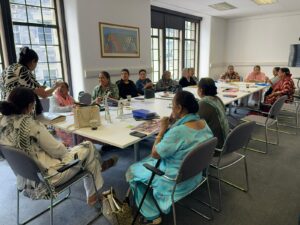
Northern Corridor Community Volunteers (NCCV) and Summerlee Museum of Scottish Industrial Life will work together to help tell the stories of people who lived during the period of extractivism in the Northern Corridor and how their lives continue to be impacted today. This collaboration will focus on the Miners’ Strike of the 1980s and the period of deindustrialisation that followed. NCCV and Summerlee Museum will work with the daughters of miners in Cardowan and the Moodiesburn Retired Miners branch members to co-produce heritage activities within the museum and the local area. Throughout the project, they will bring lived experience of life in the 1980s in Lanarkshire pit villages to the fore.
Claire Williams, Funding Officer at Northern Corridor Community Volunteers said:
“So far, the programme has enabled us to bring local groups together to look at the current heritage offerings and think about the changes we want to see. This development phase has enabled a much needed banners project, giving the Retired Miners a banner they can be proud of and working towards a replacement banner for Cardowan Colliery as theirs was sadly destroyed in a fire. The story of the creation of the memorial garden, the men behind it and their efforts in holding an annual memorial service which is so important to the local community and the continued fight for worker protections is one which deserves recognition, and we hope the next steps in the project will see that become a reality.”
A further two Community Catalysts projects will be announced in the coming weeks.