Museums to put anti-oppression learnings into action through Delivering Change Micro Grants
We are pleased to announce that Museums Galleries Scotland has awarded eight organisations a total of £21.5k through our Delivering Change Micro Grants fund to help museums turn learnings from the anti-oppression programme into practical action.

The grants, worth up to £3,000 each, will support museums that have taken part in Delivering Change through Museum Transformers, Museum Activists or the Sustainable Co-Production Fund. Each project responds to issues explored through the programme, including accessibility, anti-racism, mental health and anti-oppression.
The awarded organisations and their projects are:
- The Whithorn Trust – Mapping Whithorn’s Medieval World
- Eastriggs and Gretna Heritage – Developing anti-racism practice at the Devil’s Porridge Museum
- City of Edinburgh Council – Queering Lauriston
- Glasgow Life – Intercultural Youth Group Legacy Project
- Paxton Trust – Training and materials to support accessible learning
- Royal Scots Regiment, on behalf of The Association of Scottish Military Museums – Trauma-informed practice training
- National Galleries of Scotland – Senior management anti-racism training
- Royal College of Physicians of Edinburgh – Accessible Museum in a Box
Putting learning into practice
Delivering Change micro grants provide targeted support for museums to act on learnings from their participation in the three-and-a-half-year MGS programme. The fund helps organisations address barriers to inclusion, test new approaches and embed anti-oppression principles in their work. Funded activity can include external facilitation or training, new interpretation, measures to improve accessibility, and payment for people with experience of systemic exclusion who contribute their time and knowledge.
Delivering Change is delivered by MGS and funded by The National Lottery Heritage Fund, thanks to National Lottery players, Esmée Fairbairn Foundation and the Scottish Government.
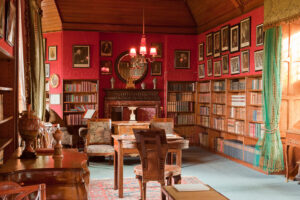
Several of the projects will focus on changing how museum stories are researched, interpreted and shared with visitors. At Lauriston Castle, the Queering Lauriston project will support staff and volunteers to build relationships with communities in Edinburgh, undertake training and share lesser-known stories from the castle’s history. The team will work directly with Indigo Dunphy-Smith, creator of the toolkit, ‘How to Queer Your Historic House’.
Niamh Lynch, Assistant Steward and Project Lead at Lauriston Castle, said:
“Historic houses and their collections offer a vital way to look at the past; their power lies in looking at an object and seeing yourself reflected in it. However, this is not always people’s experience.
“With the MGS Delivering Change micro grant and working collaboratively with Indigo Dunphy-Smith to implement her ‘How to Queer your Historic House’ toolkit, we are aiming to break down systemic barriers and continue our mission to create a sense of home and belonging for everyone who walks through the doors at Lauriston Castle.
“Lauriston, in its current iteration, has stood for over 400 years and echoes with stories waiting to be told. From an owner in a same-sex relationship to Byron’s books, classical imagery and everyday objects, Lauriston is a place for everyone to find themselves. This grant will allow staff and volunteers to build relationships with communities in Edinburgh, gain confidence, undertake training, learn new research perspectives, and share lesser-known historic details. We are excited to see where this project takes us!”
The Whithorn Trust’s Mapping Whithorn’s Medieval World project will explore Whithorn’s international connections and trade routes, helping the museum retell its stories of origin through a more inclusive lens. Developed following anti-racism training through the Museum Transformers programme, the project includes an international map showing early Whithorn as a place shaped by multiple influences, shifting identities and several languages.
Julia Muir Watt, CEO of The Whithorn Trust, said:
“The Museum Transformers programme from MGS has been a catalyst for new thinking about Whithorn, particularly in repositioning it as part of a network of international connections and trade routes that brought literacy, ideas and cultural exchange to what now appears to be a remote corner of Scotland. By mapping these links – as far as modern-day Tunisia – we aim to retell Whithorn’s stories of origin and celebrate the fact that Whithorn is a unique cultural melting pot, where multiple overlapping cultures and languages have been in play over two millennia. In doing so, we will make our museum a more welcoming space for people of different cultures, faiths and languages.”
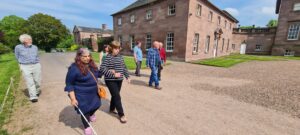
At Paxton House in Berwickshire, the micro grant will support further audio description training for staff. Building on the team’s Delivering Change training, Paxton also plans to develop a wireless audio tour system to make tours and learning activities more accessible.
Dr Fiona Salvesen Murrell, Curatorial, Paxton House, said:
“By upskilling our staff at Paxton House through audio descriptive training and with the support of assistive technology, we will be able to deliver more diverse, inclusive, and accessible tours and events through slow looking supporting deeper engagement with our amazing collections and history.”