Delivering Change Conversations: Getting started
Delivering Change Conversations is a space to come together to explore learnings, successes and failures from the collective effort between Museums Galleries Scotland and partnering museums, galleries, and community groups to restructure as organisations based on anti-oppressive principles.
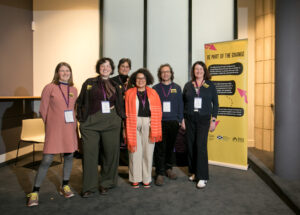
This blog post is the result of a conversation between Ellie Muniandy, Sheila Asante and Gabi Gillott from the Delivering Change team at MGS, where they discussed some of their learnings from organising anti-oppression training across museums in Scotland. In this first part of the conversation, they go over some of the intentions behind the programme, and the specificities of MGS’s position to deliver it to the sector.
What were the intentions behind the training elements of Delivering Change?
The delivery phase of Delivering Change, which we are currently in and includes the training programmes, has come after a nine-month long development phase.
During the development phase, we worked with an advisory group, did extensive research and took time to think about how we wanted this project to build on previous work. We studied other anti-oppression programmes inside and outside the sector. The building racial literacy programme which Education Scotland produced for learning practitioners was one of our core models. As we worked to translate it in a way that would fit the museum sector, we knew it would need to bring people together from across different organisations and from across the hierarchy to build and solidify their understanding of anti-oppression.
One thing that we were aware of and keen to keep in mind as we moved forward with planning, is that the museum sector across Scotland brings together completely different types of organisations, of different sizes and with different competing challenges and opportunities. As we tried to build a programme to support this kind of deep, personally challenging, transformative work, we knew this would have different meanings for different participants and that successes might also look very different. This is why we chose to build this programme as a journey that we would embark on together and where we support and guide each other along the way rather than a project with strictly defined outcomes. It was important for us to have flexibility and space to learn and adapt even once the delivery phase began.
The training elements of Delivering Change have focused on anti-racism and anti-ableism. Can you explain that decision?
We chose to focus on those two aspects of anti-oppression and decided to start with anti-racism because Delivering Change comes as a result of the work we did with Empire, Slavery and Scotland’s Museums (ESSM). The ESSM project outlined six recommendations, the second of which is that the sector should take part in anti-racism training. ESSM identified how the creation of museums was a product of of Empire and Slavery in Scotland so it was clear we needed to have anti-racism as a core foundation and baseline for the Delivering Change programme.
We didn’t want to put people into boxes and keep them separated in terms of exclusion. We wanted to make space for intersectionality and build a more well-rounded understanding of people in their whole multi-layered-ness to understand other exclusions. This is an essential starting point to understand power, privilege, oppressions and identity as well as the different lived experiences and different barriers that people face – so we decided to focus on anti-ableism alongside anti-racism.
Although the more in-depth training we are facilitating is mostly focused on these two strands of anti-oppression, the goal is to equip participants with the tools and understandings they need to continue their own anti-oppression journeys beyond that. Delivering Change has brought other opportunities for participants to broaden their understandings of different intersectionalities, identities, and opportunities for solidarity between struggles. In 2025, we welcomed Davie Donaldson from Progress in Dialogue and Michelle McGrath from Museum as Muck to speak to Delivering Change participants in the format of Knowledge Exchanges. In 2026, we are planning to do more of this, particularly to welcome the voices of people from the LGBTQ+ community to talk about their lived experiences.
Why is MGS as an organisation in a particularly good position to be delivering this programme of transformative change?
MGS is in a unique position to support the Scottish museum sector in their anti-oppression journey for several reasons which have been apparent throughout the Delivering Change programme.
Firstly, because MGS has solid knowledge of the sector and existing relationships with museums in Scotland. This was especially helpful to our team during the development phase, as we already had a good understanding of the audience we were tailoring the programme to.
Perhaps more importantly, because our position as a funder of the Scottish museum sector has put us in a position to be particularly impactful. We know from research and experience that funding is key to setting priorities in the sector. Previous projects in this area found it hard to get to the stage of embedding learnings, partly due to being tied up in short-term funded projects. Although Delivering Change as a project is limited in time, MGS’ role as the national development body for the sector is not. This means that we can keep offering ongoing support to organisations as they restructure based on anti-oppressive principles even if this takes time – which it does. This comes hand in hand with an element of accountability for us, highlighting what areas of our wider work we need to develop in order to continue to support the sector through their ongoing journey.