
Turning the tide: marine conservation at Scotland’s museums



Introduction
Museums and galleries can play a leading role in protecting and promoting Scotland’s rich marine life. By organising climate-conscious exhibitions and activities, they’re raising awareness of our impact on the world beneath the waves.
From traditional boatbuilding and snorkel safaris to plastic waste ‘trashion‘ shows, museums and galleries are finding creative ways to make a difference. Get inspired to take action by reading these examples from across the country.
Reflecting on this activity, our Climate Manager Lucy said: “To see how Scotland’s maritime museums are engaging with marine conservation fills me with hope. Scotland’s heritage is deeply connected to our coastlines and waters, and in understanding their past and working to protect them now we can ensure a prosperous future for our marine environments and coastal communities.”
Immersive engagement
Museum engagement programmes are reconnecting coastal communities to the marine world on their doorstep – and improving the health and wellbeing of participants in the process.
Strathnaver Museum
The history of Strathnaver, located on the North coast of the Highlands, is closely tied to ships and fisheries.
As part of Strathnaver Museum’s 2024 Artist Residency Programme, Debasis Biswas explored the heritage and conservation of salmon and salmon fisheries along the coast, and ran workshops with the local primary school to highlight the negative impact of microplastics on the marine environment. An exhibition of his work will be opening at the museum on April 1st 2026.
The museum is also leading on a boatbuilding project that has tackled social isolation and preserved local marine traditions. More information on this project can be found in our Focus on: health and wellbeing in action article.
Scottish Maritime Museum
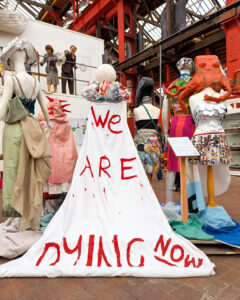
Marine conservation was at the heart of the Scottish Maritime Museum’s programming this year. They hosted talks from world-leading conservationists and wildlife photographers, promoted climate-conscious businesses with their Dive In! sustainability fair, and worked with an intergenerational group to create an exhibition of ‘trashion’ made of litter collected from the nearby beach.
On the museum’s blog, Community Engagement and Development Officer Jennifer Pless shared how the group “used the Museum’s collection to inspire and inform their exploration of the impact of marine pollution, fast fashion and our own personal responsibilities on the Oceans and our climate”.
In July, the Scottish Maritime Museum underpinned this activity by becoming a member of the Our Seas Coalition. This has committed the museum to the promotion of sustainable fishing and marine conservation efforts.
📸: ‘Trashion’ exhibition. Credit: Scottish Maritime Museum
Cromarty Courthouse Museum
With its looming oil rigs and enormous cruise ships, the Cromarty Firth bears witness to the profound impact of humans on the marine world. Cromarty Courthouse Museum has teamed up with the Natural History Museum to explore the relationship between humans and the sea in their exhibition Changing Tides:Cromarty’s Firth, which runs until the end of 2025.
The exhibition features oral histories of the Firth that have been collected in collaboration with the local youth cafe, and includes practical tips on how visitors can preserve marine ecosystems. It also engages with visitors by capturing their views on energy production, sustainability, and the marine environment.
In-depth exhibitions
What lurks in the deep? Why is it important? And what can we do to protect it? Museum exhibitions invite us to be inspired by nature and reflect on humanity’s long and complicated relationship with Scotland’s seas.
Dumfries Museum
Held over the summer, The Ever-Changing, Changeless Sea exhibition at Dumfries Museum explored marine storytelling and biodiversity. The centrepiece of the exhibition was a dolphin skeleton that had recently been found on the beach by locals. The museum had a packed engagement programme for the exhibition which included Gaelic tours, a poetry night, author Stephen Rutt talking about his award-winning book The Seafarers: A Journey Among Birds, and events on waste and plastic pollution found in the Solway Firth.
The McManus: Dundee’s Art Gallery & Museum
Sounding Line is an immersive ceramic installation by artist Mella Shaw that explores the devastating effect of marine sound and sonar pollution on whale species.
The large-scale sculptural forms are inspired by whales’ tiny inner-ear bones. In the installation, Mella wraps her sculptures in red marine rope that resonate with sonar pulse. Visitors are encouraged to feel these vibrations by touching the ropes, and reflect how marine life experiences sonar underwater. Sounding Line runs until January 18th 2026.
📸: ‘Sounding Line’ at the McManus. Credit: Mella Shaw

Kilmartin Museum
In autumn 2024, Kilmartin Museum invited six artists to explore the life that teems beneath the waves of the Argyll Coast through snorkelling and underwater drawing. The works they created from this unique residency – a mixture of jewellery, printed silks, sculpture, animation, film, mosaic, and felting, each reflecting a commitment to art rooted in ecological care – have been brought together for Holdfast, an exhibition which runs until December 14th 2025.
Making waves with climate action
Museums and galleries are taking direct action to support marine ecosystems and protect the oceans by reducing their environmental impact.
National Museums Scotland
The 2023-24 Rising Tide exhibition at the National Museum of Scotland focused on the impact of rising sea levels and pollution on the islands of the Pacific. This spurred National Museums Scotland to consider the sustainability of their exhibition design. They re-used building materials from other projects, sourced recyclable design elements, and sought to work with contractors who were committed to minimising their environmental impact.
A detailed case study about the Rising Tide exhibition can be found on the Museums Association website.
Stromness Museum
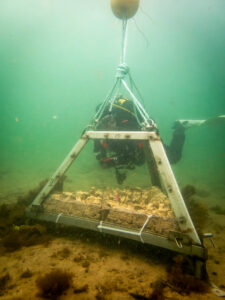
Shoogly Holm, a floating marine ecosystem designed by artist Jenny Pope, was recently launched off the Orkney coast as part of a partnership involving Stromness Museum. The museum also worked with a youth group this year to engineer a temperature-sensing buoy that transmits data to the museum, supporting the climate monitoring of the seas around Orkney.
Stromness Museum also offers a wide range of climate-conscious engagement, including snorkel safaris in the sea near the museum, Shoreline Rambles which highlight vulnerable species in the area while offering guests a sneak peek at the museum’s natural history collections, and a digital exhibition on local marine life.
📸: Launch of Shoogly Holm. Credit: Stromness Museum
Dundee Heritage Trust
It’s fitting that the home of the pioneering Antarctic research ship RRS Discovery has placed climate science at the heart of their business strategy.
Dundee Heritage Trust recognises that the sustainability of their organisation is tied to their environmental impact. As a result, the Trust has created a sustainability strategy which commits them to reducing waste, limiting their emissions, and sourcing responsibly. They’ve received MGS funding to implement energy and carbon-saving improvements including an upgrade to LED lighting, and are underscoring their emphasis on the environment by developing a new climate science gallery at Discovery Point.